


I used to be a big fantasy reader. It was almost all I read for a number of years, in fact. I plowed through Brandon Sanderson’s Stormlight tomes and all manner of similar sorts of stories; I even went through a period of developing and dabbling in the writing of my own fantasy epics. Let’s just say: I’ve been around the block a bit.
Thing is, I can’t do it anymore. If you handed me a Sanderson brick today, I probably couldn’t make it through the first few chapters. In fact, I sold my entire hardcover collection last year (which at one point I’d prized enough to save from a tornado—but that’s another story). So—what changed?
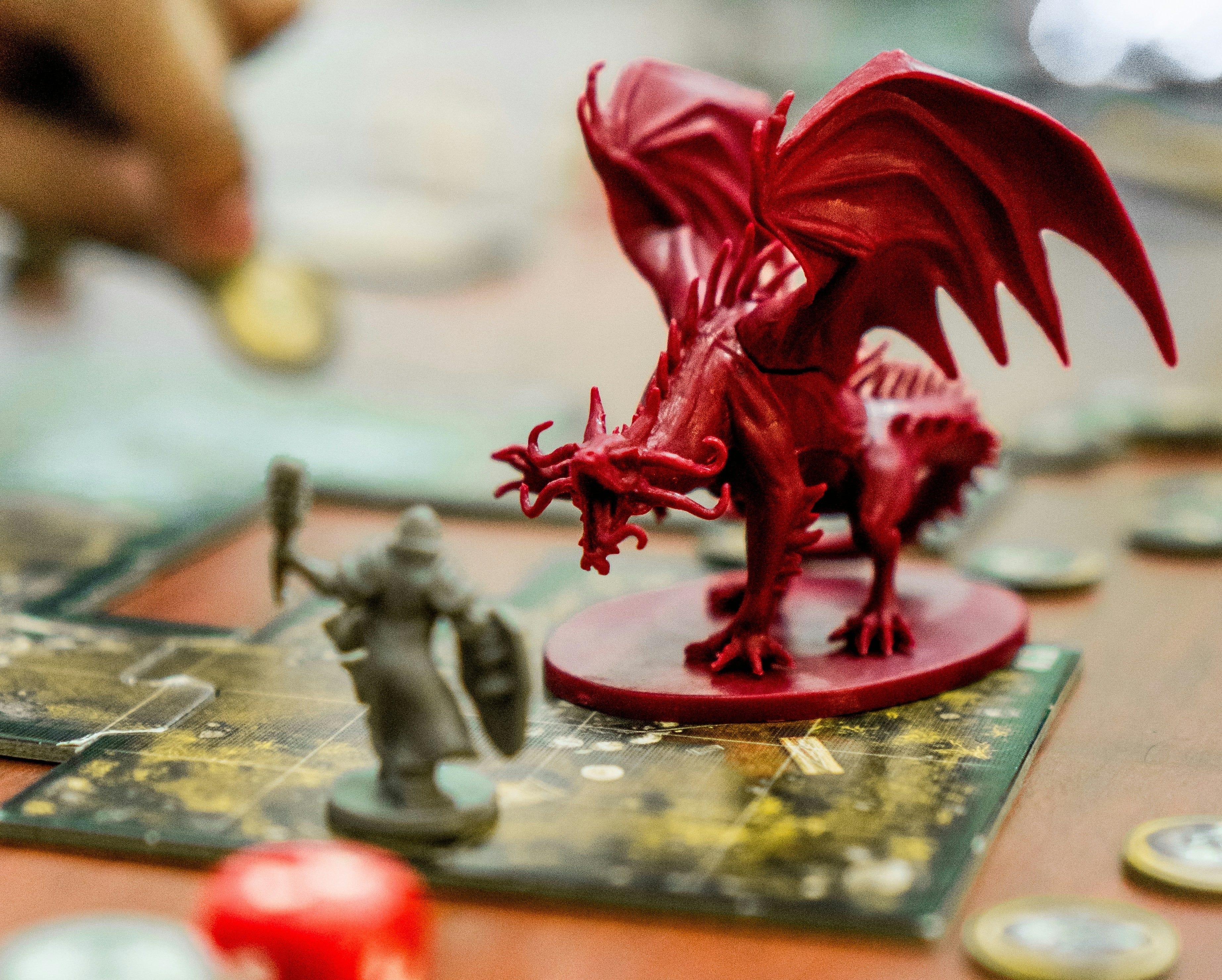
It wasn’t the quality of the books or the writing, (though in Sanderson’s case, I am sorry to say that some woke bandwagon jumping definitely occurred, which left me...not angry, just disappointed). Instead, it was me. It was a gradual change, to be sure, an eye-opening, if you will. I began to branch out my reading away from what I’ve come to think of as literary junk food—a category in which much (though not all!) of the fantasy genre is pretty firmly entrenched—and in this venture, discovered that most of modern fantasy isn’t really storytelling or myth-making, it’s more just...sandboxing.
Myth-Making vs. Worldbuilding
I read an article some time ago that has stuck with me about why Tolkien is great but Sanderson isn’t. (I know it may seem as though I’m picking on Sanderson here, but I’m not; he’s simply a big fish and pretty well representative of the modern state of the genre.) Something I’ve come to realize since reading this piece (and others), is that there is a world of difference (ha) between worldbuilding and myth-making.
Fantasy, at its best (i.e. Tolkien, Lewis) is myth-making. The story, the world, the characters—all of it—exist to convey some larger, deeper, more specific idea or meaning found in our world. The Lord of the Rings was literally created as a mythology for England. The Chronicles of Narnia was written as a mythological Christian allegory for children. Greek mythology was built around concepts of virtue and vice and the conflicts between them, and how all of this affects mortals (and immortals). All of these examples were crafted with the intention of discussing some fundamental aspect of reality through a stylized, mythologized lens. That is what makes them powerful. That is what makes them epic.
Now let’s contrast this with the modern genre. Again, I’ll use Sanderson as an example here, though he is far from the only one: In a Sanderson novel, you’d be hard-pressed to derive any sort of genuine, serious symbolism earning his stories the description “mythological”. Instead, what you get with these sorts of fantasy “epics,” is a world built out essentially like a video game. It’s full of flash and fun magical mechanics for the protagonists to play with, and sure, sometimes the story is pretty engaging and pacy, but at the end of the day, everything is serving the made up world. It’s the author playing in his or her personal sandbox, and we all get to read it.
I’m not saying this is “wrong” or that such fiction can’t be as enjoyable to read as potato chips are to eat. But the genre has undeniably fallen from the time when it was dominated by the likes of Tolkien and Lewis.
Sandboxing vs. The Real World
Ultimately, what turned me off from fantasy (almost entirely) as a genre, is that the sort of sandboxing it has become known for pales in comparison to the compelling nature of Reality. It simply doesn’t move me. Because the world is just that—a world—the characters are just that: characters. They can be fine and decent, even entertaining characters, but rarely do they become really Real, really Human. How can they? They exist on what is essentially a DnD tabletop board.
I was most struck by this contrast, I think, while reading Hemingway’s The Sun Also Rises earlier this summer. By all outside appearances, it features what could be considered perhaps by some a pretty dull and basic world/premise: a group of wildly depressed expats romp across France and Spain, partying to forget they’re wildly depressed (it doesn’t work). We have about ten chapters of bullfighting. Just bullfighting. Thing is, the world is alive. You don’t care that you’re reading ten chapters of bullfighting, because it’s just so real—the place is real, it has a physicality to it, and the characters are real, three-dimensional human beings inside that world. It’s a world, in a way, that doesn’t exist anymore and that’s its own intrigue. And it helped me identify the hole in the modern fantasy genre: a distinct lack of these elements. Because, ultimately, the world does not feel lived in, it feels manufactured.
So, Does Modern Fantasy Have to Be This Way?
Well, no. Frankly, I think the reason so much of it is this way has more to do with the topic of my last article than anything inherently “flawed” within the genre. It’s politics, my dear Watson. The fantasy genre has become a way for authors to feel as though they can escape (literally) the real world and all The Discourse involved in it. And so the writing and the stories have become thin, cheap, and uncompelling because they do not translate or map onto reality in any meaningful way—and that is by design.
But, as evidenced by the titans of old, fantasy certainly does not have to be a total sandbox, devoid of myth or meaning. It can, in fact, be a powerfully compelling genre, capable of communicating ideas with a certain elegance and efficiency that “real world” fiction can’t touch. All that requires is that the author not shrink before the council of postmodern harpies that decry the taking of any defined moral stance. Because, of course, you can hardly expect to build a compelling myth without such a foundation. And if we want fantasy to be great again (which, I think we do), we must divert from simply “worldbuilding” and aspire, as Lewis and Tolkien did, to myth-making.
So, to all the aspiring fantasy writers out there: I hope that, contrary to what you may have thought coming in the door, you found this article encouraging. Perhaps it will give you the clarity and courage to be the change we need in this genre. I sincerely wish you the best of luck!
Thank you for reading Green Tea & Post-It Notes. If you enjoyed this article and would like to support my work, please drop by and Buy Me A Coffee.
Is it pretentious of me to say I have always been disappointed in Sanderson? I never could get into his books. His writing always felt bland to me. I have always been very picky about fantasy. I never liked the genre as a whole but the fantasy books I love absolutely moved me and have sort of lived with me forever.
Sometimes it feels easy to be cynical about the state of the genre, but then I’m reminded that Tolkien and Lewis were only two people. And maybe we just get two really good ones in every other generation or so. I guess if we want to find their equivalent today, we probably have to patiently dig through a lot of sandboxes to find the worthwhile creators.
One fantasy series that has not disappointed me is Christina Baehr’s The Secrets of Ormdale. She writes like she’s from a different time and like someone who has been so deeply immersed in literary mythology that it inevitably contextualizes her books in a way that never feels superimposed. When I saw her writing inspiration, I was reminded that most writers are overwhelmingly working out of a shallow pool of literary context.
Another author I’ve stumbled upon recently is Beth Brower. She’s most well-known for her Emma M. Lion series but her fantasy is equally as delicious. Once again, an author who is grotesquely well-read and immersed in the classics.
Another recent fantasy story that did not disappoint, of a very different genre, was the video game Clair Obscur: Expedition 33. It starts out like some typical fantasy adventure where the heroes are off to defeat the villain, but only for the heroes to tragically discover this story isn’t about them at all and they’ve just happened to insert themselves into a cosmic power struggle between deities. It feels very much like The Odyssey. It was like being immersed in an art piece more than it was playing a video game. I return to the soundtrack when I need my hope for humanity and human creativity refreshed.
I’d love to know what artists and authors stand out to you as breaking from the sandbox mold!
Great article. You've nailed it. A sandbox is not a satisfying approach to storytelling, because it necessarily prioritizes something unreal (the magic system, etc) over what's real (good and evil, human relations, etc). Mythmaking uses the worldbuilding to reveal truths about reality. Sandboxes reverse that and use characters/relationships/etc to explore the implications of the worldbuilding.
You're right to pick on Sanderson (who is very talented), because he's the best sandboxer. If even he can't make the sandbox approach into genuine literature, then the problem is probably with the approach itself.
Incidentally, I think the same problem bedevils many video game franchises. The sandbox approach has hollowed out the stories of franchises like Zelda, which once leaned into simple, mythological storytelling with great success. Curious if you'd agree.